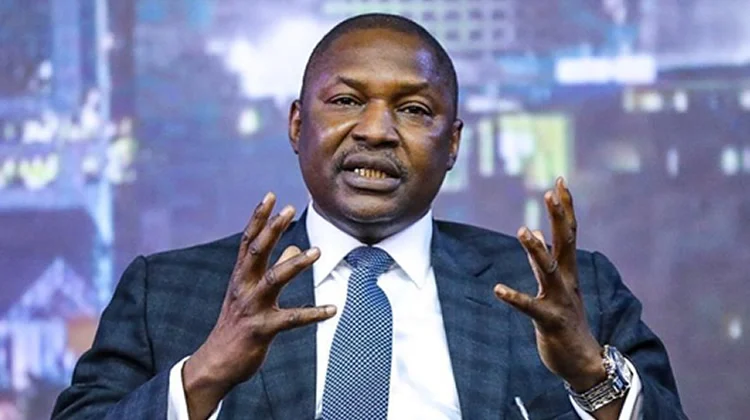
The Economic and Financial Crimes Commission (EFCC) has confiscated the international passport of former Attorney-General of the Federation and Minister of Justice, Abubakar Malami (SAN), as part of an ongoing probe into the handling of $490 million recovered from the Abacha loot under the Mutual Legal Assistance Treaty (MLAT).
Malami, who was released on bail around 1:00 a.m. on Saturday after hours of questioning, was directed to report to the EFCC headquarters in Abuja every day for the next 30 days. The condition also restricts him from travelling outside the country without the approval of the commission or a court order.
Sources said the former minister must provide full clarification on the whereabouts of the recovered funds and other related matters during the period.
“We are not accusing him of stealing money, but he must account for the $490 million recovered through MLAT. This is one of the key issues he has to address,” an EFCC source explained, noting that the volume of documents and level of engagement required warranted the seizure of his passport.
The anti-graft agency added that its findings would be made public after a thorough investigation, insisting it would not be distracted by what it termed “braggadocio” from the former minister.
Reacting on his X (formerly Twitter) handle, Malami described the allegations as fabricated and politically motivated. He expressed confidence that he would be vindicated.
“The engagement was successful, and I was released while scheduling further sessions as the truth behind these fabricated allegations continues to unfold. I thank Allah for His intervention,” Malami wrote, without mentioning the seizure of his passport.
The probe marks one of the most high-profile investigations involving a former chief legal officer of the nation since the recovery of billions looted under the late military ruler, Gen. Sani Abacha.
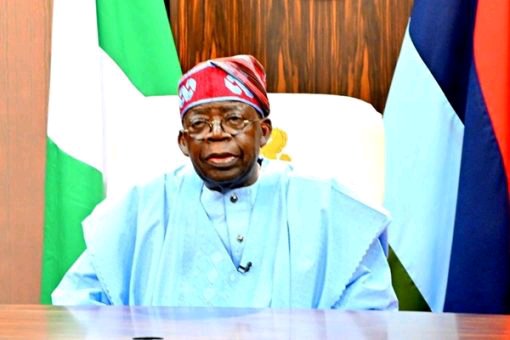
President Bola Ahmed Tinubu has forwarded a fresh list of 32 ambassadorial nominees to the Senate for confirmation, marking a significant expansion of Nigeria’s diplomatic representation. The new batch — comprising 15 career diplomats and 17 non-career appointees — comes just days after an initial submission of three nominees.
In letters addressed to Senate President Godswill Akpabio, President Tinubu urged the upper chamber to give prompt consideration to the nominees, who are expected to strengthen Nigeria’s global engagements.
The list, released by the Special Adviser to the President on Information and Strategy, Bayo Onanuga, includes notable political figures such as former presidential aide Reno Omokri, ex-Minister of Aviation Chief Femi Fani-Kayode, former INEC Chairman Mahmud Yakubu, former Enugu Governor Ifeanyi Ugwuanyi, and former Lagos Deputy Governor Otunba Femi Pedro.
A total of four women were nominated as career ambassadors, while six women were shortlisted in the non-career category, reflecting a broader representation effort.
Other prominent names include former first ladies Angela Adebayo and Fatima Florence Ajimobi; former Lagos Commissioner Lola Akande; Senator Grace Bent; ex-Abia Governor Okezie Ikpeazu; Senator Jimoh Ibrahim; and seasoned diplomat Ambassador Paul Oga Adikwu.
The career nominees feature experienced public servants drawn from various states, expected to take up postings in countries with strategic bilateral ties to Nigeria — such as China, India, Canada, South Korea, South Africa, and the United Arab Emirates — as well as at multilateral missions like the United Nations, UNESCO, and the African Union.
This submission follows last week’s nomination of three high-ranking diplomats: Ambassador Ayodele Oke (Oyo), Ambassador Amin Mohammed Dalhatu (Jigawa), and Retired Colonel Lateef Kayode Are (Ogun), who are in contention for postings to the United Kingdom, United States, and France.
President Tinubu noted that additional ambassadorial appointments will be announced in due course.
•Decry lack of political will to ‘stop this nonsense’ •How to rescue Nigeria
By Kingsley Omonobi
IN the past few weeks, the nation has been thrown into turmoil with frightening security breaches and kidnappings.
These include the brazen murder of a Brigadier-General of the Nigerian Army, Musa Uba, Commander 25 Task Force Brigade in Borno by ISWAP/Boko Haram terrorists, the kidnapping of 25 students of Government Girls Secondary School, Maga in Kebbi State and the mass kidnapping of over 200 pupils and teachers of St Mary’s Primary School, Niger State, not to forget Thursday’s report of kidnap cases in Federal Capital Territory and Niger State, totalling 30.
Saturday Vanguard reached out to retired generals across the military, intelligence and other security formations with high-level strategic training, on the upsurge of these breaches as more kidnapping happened in Edo and other places during the week. We asked what could be done to restore confidence in the society and even among security operatives.
The Generals included former GOCs, AOCs, FOCs, Field Commanders, and Commandants of Specialized Military Training Institutions. Some of the generals said they were tired of sounding like broken records as several suggestions on the way out of these insecurity embarrassments, had at several times been proffered.
No political will before now Echoing the views of the generals, one of them, who spoke on the condition of anonymity, said: “These incidents are undeniably tragic and raise significant concerns regarding operational security and the potential for intelligence leaks within the military as well as interference from outside the chain of command. Our ranks and equipment have been infiltrated. They (authorities) know what to do.
Unfortunately, there was no political will, before now, to stop this nonsense. May the soul of Brig Gen Uba rest in peace. May the Good Lord comfort and strengthen his family. We hope the innocent girls, children and teachers of schools, who were kidnapped will be successfully rescued. These unfortunate events highlight the imperative for enhanced operational security protocols and proactive measures.
“Several factors may have contributed to this situation, including compromised communication channels. The interception of location coordinates by terrorists and bandits indicates possible vulnerabilities in the military’s communication systems, potentially due to un-encrypted or inadequately secured transmissions.
“The likelihood of informants existing within military ranks or among local associates leaking sensitive information to Boko Haram (BHT) cannot be dismissed. Also, delays in reinforcements or failure to respond to distress signals may have afforded insurgents the opportunity to identify and apprehend the individual in question.
“Boko Haram has demonstrated an ability to leverage intelligence effectively and execute coordinated attacks, suggesting they may possess advanced surveillance capabilities or networks of informants”.
On how to prevent the recurrence of such incidents in the future, he said: “Investing in encrypted communication devices and ensuring comprehensive training for personnel on their use is essential to protect sensitive data from interception. It is vital to enhance vetting processes and monitor personnel for indications of collusion with insurgents to mitigate insider threats.
“Implementing swifter reinforcement and rescue protocols will minimize the window of opportunity for insurgents to act on intercepted information. The deployment of deception strategies, such as broadcasting false coordinates, can mislead insurgents and safeguard actual troop movements.
‘Establishing trust with local communities is crucial to diminishing the influence of Boko Haram and limiting their access to informants. The utilization of drones and other reconnaissance technologies to monitor areas surrounding troop movements will also enable the interception of enemy activities before they can initiate an attack. There should also be a Joint Army, Airforce Air and Land Operations with its own air assets like helicopters and unmanned drones for attacks and surveillance capabilities which both services possess.”
AANI proffers solution Speaking on the issue, the Alumni Association of the National Institute, AANI, condemned the recent abductions and the persistent acts of insecurity bedeviling our nation.
Its President, Amb Emmanuel Obi Okafor, said: “These incidents, which continue to inflict fear, pain and uncertainty on innocent citizens, are unacceptable and must not be allowed to persist.
“AANI calls for urgent, coordinated, and expeditious action toward the safe rescue of all abducted persons. We urge the Federal Government, state governments, and all security agencies to redouble their efforts, restrategise, and adopt more proactive, intelligence-driven measures to protect the lives and property of Nigerians.
“National security is a collective responsibility. As an organization committed to providing strategic leadership and supporting national development, AANI reaffirms its readiness to collaborate with government and security institutions in the search for sustainable solutions to Nigeria’s security challenges. We remain willing and available to offer expertise, guidance, and partnership just as we have always done. The safety of every Nigerian must remain a top priority. Together, and with renewed resolve, we can restore peace, security, and confidence in our nation”.
Dayo Johnson, Regional Editor, South West; Samuel Oyadongha; Demola Akinyemi; Egufe Yafugborhi; Rotimi Ojomoyela; Peter Duru; Ozioruva Aliu; Ike Uchechukwu; Emem Idio; Daniel Abia; Laolu Elijah & Deola Badru
As the spate of kidnapping and killings across Nigeria escalates, stakeholders and security experts have described the problem as complex urging the Federal government to stop scratching the surface and go after the sponsors of terrorism, banditry and kidnapping in the country.
They insisted that unless the sponsors of terrorism and other criminal engagements are arrested and prosecuted according to law, insecurity would continue unabated in the country.
Go after sponsors of insecurity in Nigeria, Sara-Igbe Urges FG
Chief Anab Sara-Igbe, former security adviser to Rivers state government, lamented that some of the sponsors of the present insecurity are highly placed persons, adding that some of them are in government while others occupy influential positions in the society and business sector. He said, “Unless the government develops a strong political will to go after them, we will continue to scratch the surface without a solution. Nigeria is today facing both international and political terrorism which could only be confronted by adopting different approaches.
International terrorism has to do with foreign countries whose interest is the exploration of Nigeria’s natural resources to boost their home economies while the political aspect of it has to do with politicians whose concern is to grab power in 2027 by all means.
This government must know that in fighting terrorism, everybody is a suspect. You don’t fight terrorism as if you are fighting conventional warfare. In going forward, private security experts must be contacted for Intel on these criminals. The government cannot continue to rely holistically on the military alone which is already over-stretched. It is important to deploy the services of credible private security outfits. In doing so, there must be trust and confidence among the various institutions for intelligence sharing. It is one thing to share intelligence and another thing altogether for the government to have the boldness to go after these criminals, many of whom are in the system. The government must be decisive in the war against terror. We cannot win this war the way we are going. Close the tap and the water will stop flowing. If the sponsors are identified and punished accordingly, terrorism and other criminalities will end.
We need to rejig our Mobile Police Force immediately —Rtd AIG
A retired Assistant Inspector General ( AIG) of Police who pleaded anonymity said “insecurity in Nigeria has to start with a complete rejig of our security architecture. Firstly, the SOP of the MPF has to be revisited and changes made across the 36 states. Too many cooks spoil the broth. Leadership hierarchy must be streamlined to ensure that no agency is sabotaging the other as there are too many people involved in our security matters. The Mobile Police Force is key in the fight.
If each state can equip a minimum of 6 units of mobile police they will change the tide in weeks. Also money paid as ransom must be tracked whether they are valid notes or not, and the culprits must be wiped out.”
Major Rasaq Salawu (rtd), said: As a retired military personnel and a security expert, I believe Nigeria can still be rescued from the insecurity ravaging the country, but only through a sincere, coordinated, and well-executed national strategy. From my years in service and my continued work in security, it is clear to me that our security architecture must be modernised. We need better equipment, improved training, and stronger inter-agency cooperation. Our forces are dedicated, but they cannot succeed without the tools and support required for today’s complex threats. I also hold the firm view that intelligence must drive all our operations.
The more we rely on timely information, data analysis, and community reporting, the fewer attacks we will experience. We must not continue reacting after the damage has been done. Equally, I cannot ignore the socio-economic conditions enabling insecurity. Poverty, unemployment, corruption, and social injustice are pushing young people into crime and extremism.
If we fail to address these underlying issues, military operations alone will never bring lasting peace. Our police system needs urgent reform. A decentralised and well-trained police structure will bring security closer to the people and reduce the pressure on the military. Officers must be properly equipped, well paid, and insulated from political interference. Community involvement is another key part of the solution. As someone who has worked closely with local communities, I know that no security operation succeeds without the trust and cooperation of the people. Traditional institutions, youth groups, and community leaders must be empowered to play their part within a regulated framework. Our borders also demand serious attention. The unchecked movement of arms, criminals, and illegal migrants continues to worsen our security situation.
Investing in modern border surveillance and working more closely with neighbouring countries will greatly reduce these threats. Ultimately, everything depends on political will. Without committed leadership, accountability, and respect for the rule of law, even the best strategies will fail. Nigeria needs leaders who are ready to prioritise national security above political interests. Finally, we must rebuild national unity. A divided country is an insecure country.
By promoting dialogue, tolerance, and a renewed sense of national identity, we can weaken the forces that feed insecurity. In my professional assessment, Nigeria can be rescued.
But it requires honesty, courage, and collective responsibility. If we combine security reforms with socio-economic development, effective policing, strong leadership, and community partnership, we will overcome the insecurity threatening our future”.
Government lacks will power to implement decisions, advising on security frustrating – Gen Ikponmwen Former Provost Marshal of the Nigerian Army, Brigadier-General Idada Ikponmwen (rtd) said “it is frustrating advising the Nigerian government on tackling insecurity because they don’t listen. I have said that the recipe for security to improve in Nigeria is for the government to have the will power to uphold the constitution or change the constitutional provisions to make some changes. Government after government has been worse than the one before it.
Talking to a government that will not do anything is frustrating. If it will take Trump to get our system to work, so be it and many Nigerians also said so. Some said it’s long overdue”.
Sunday Ehindero, Former Inspector General of Police, IGP ”The question of how to rescue Nigeria from insecurity ravaging is multi-dimensional. The structure that the security agencies employ to contain banditry, kidnapping is defective.
The security architecture is subject to constant change and adaptation. There is the need to rejig the security architecture of this country to ensure that internal security functions are that of the police and other security agencies.
The military should concentrate on external matters and the defence of our borders. The new presidential directive to withdraw police attached to VIPs is most welcome. More manpower will thereby be available to the police. Such directives had been given when I was the IG in 2005.
But political interference made the President rescind it. So also, the presidential directive to recruit 30,000 policemen is commendable. But how are they to be accommodated? In 2006 when such a presidential directive was given and 40,000 police men were recruited; there were no provisions for their accommodation. Police stations and abandoned vehicles became their dwelling places. I hope accommodation will be provided for these recruits. I had all along opposed the establishment of State police on the ground that we were not ripe for it.
But when I saw the Bill for the establishment with its checks and balances, I became convinced that it was time for its establishment. Moreso, when the creation of state police is a panacea to contain the present crimes of banditry and kidnappings.
Illegal miners constitute security threats to this country. Being undocumented immigrants, they are involved in illegal mining and banditry and kidnappings. Paying attention to these and other issues can rescue the country from insecurity.
Barrister Femi Joseph, retired Senior Police officer, said, “There should be adequate provision of modern warfare logistics, motivation of both police and military personnel and recruitment of more hands into the police and the military.
Police jobs should be made more attractive by improving the welfare of both retired and serving policemen as this will encourage even graduates to join. The recent withdrawal of VIP police escorts is fantastic but will the President not be pressured to change his mind? The constitution must be amended to allow state police with necessary clauses to prevent them from being used for political purposes.
There should be training and retraining of officers to bring them up to speed with modern policing and intelligence gathering. Our courts should award maximum punishment, name and shame convicted bandits and terrorists to deter others. The policy of deradicalisation and reabsorbing the so-called “repentant terrorists” into the army or police is dangerous and counter productive as terrorists hardly forget their past. Terrorists’ sources of financing should be investigated and blocked.
The list of terrorists’ financiers should be dusted and those involved are prosecuted to show that the government is not covering anyone”.
Colonel Joseph Oluwayose (Retd) expressed confidence that Nigeria can overcome its present security challenges plaguing the country. Oluwayose maintained that despite the severity of insecurity, the country has the institutional capacity and human resources needed to tackle the hydra-headed monster provided the right security measures are implemented.
According to him, “the Federal Government’s plan to recruit more police and military personnel as a crucial part of the solution will enhance operational efficiency, improve response times, and reinforce security presence in vulnerable communities.
Also of importance is international collaboration with technologically advanced countries as modern security challenges require modern tools including drones, advanced surveillance systems, as well as intelligence gathering systems, which Nigeria must integrate through global partnerships. Security is a collective effort of everybody. If every structure of the society is very security conscious and with the support of the government, both at the national and the sub-national, I think the country can be rescued from the present insecurity”.
A retired Army personnel who preferred not to be named, said restoring public trust is central to any sustainable solution. He said, “People will only share useful intelligence when they believe the security forces will act swiftly and protect them. The government must also invest in modern surveillance tools to anticipate criminal activity before it escalates.”
A former Police officer, Daniel Arogundade faulted the largely reactive nature of policing in Nigeria.
He said officers need better training and welfare to perform effectively. He said, “Community policing should be strengthened nationwide. Officers who feel valued and properly equipped become more committed to their duties. Banditry and kidnapping thrive because the economic environment makes it easy. The government must address unemployment and poverty while tightening border security.”
A serving senior military officer, who spoke anonymously, emphasized the need for closer cooperation among security agencies. He said “many operations fail because intelligence is not shared early enough.
We need a unified national security database and joint command structures. Nigeria has capable agencies and personnel, but weak synergy. A national fusion center where all agencies operate together would significantly improve response time. No meaningful progress can be achieved without political will. Security agencies must be allowed to function professionally without shielding criminal networks.”
Time for a national conversation on insecurity, long-term plan needed — AIG Iwar (retd) Retired Assistant Inspector General, AIG, Austin Iwar, argued that the government must convene a stakeholders meeting for frank and strategic discussions where fundamental questions would be asked for the purpose of finding lasting solutions to the menace. According to him, “it is a very complicated issue because insecurity manifests in several areas like kidnapping, banditry, terrorism and other forms of criminality. I think for now there should be a long term plan. The government should carry out a major security conference and find out what the problem is with our security agencies.
The Nigerian police should be strengthened, give them confidence, improve their welfare, improve their salaries, improve their condition of service and give them the necessary equipment they need to fight insecurity. Terrorism is an intelligence thing, you fight terrorism through intelligence.”
Police must be equipped with modern equipment——Ajayi Okasanmi,Retired PPRO Kwara state Command
“If Nigeria is serious about tackling the issue of insecurity, the government and the people must be ready to come together and fix the problem. The government must adequately and intentionally equip the security forces especially the police with modern crime fighting equipment. Justice must be dispensed in accordance with the laws of the land, any body that commits a crime whether he repented or surrendered must be made to face the law. The issue of de-radicalization and reintegration must be discarded.
The welfare of men and women of the security forces must be taken very seriously. Also, retired military, police and paramilitary officers that are still energetic, agile and healthy must be re-engaged on a three or four year contract to join the serving officers to confront the present menace while recruitment of more hands must start. The government should also be accountable to the citizens, create jobs, and provide an enabling environment for young entrepreneurs.
Insecurity: Trump option, best for Nigeria – Gbemre
Zik Gbemre, Coordinator, Niger Delta Peace Coalition (NDPC) asserted: “I think the best solution for now is to invite the US to draft in its military to help us fight insecurity in Nigeria. We hear that President Tinubu is withdrawing police from VIPs. In the US, UK, Canada, etc do you see VIPs and CEOs of companies moving with police escorts? No. If there is no insecurity no person will request for police escorts. A Police escort is a sign of a failed state. Nigerian police, DSS and military don’t have capacity to fight insecurity in the country.
Truth be told, Nigeria needs the intervention of American’s full involvement to fight insecurity in the country. Or do we join the campaign that every Nigerian who can afford AK47 should acquire for self help? Insecurity is making foreign investors scared of investing in Nigeria because they have to hire police and military escorts to protect workers and facilities. So they spend more money on security than on core business operations”.
Govt should address the twin problems of poverty and unemployment – Rtd Commodore A retired senior naval officer who pleaded anonymity blamed the festering crisis on poverty and unemployment. He said: “Addressing the root causes like poverty, unemployment, and lack of access to education and healthcare could help reduce the appeal of joining, banditry, insurgency and kidnapping gangs.The government should invest more in the economy, create jobs and improve infrastructure, especially in rural areas.
Community engagement and dialogue are also key, if the government and local leaders can build trust with the people, it will be easier to gather Intel and prevent attacks as well as strengthening the security forces, providing them with the necessary resources, and ensuring they serve with integrity.”
It’s important we go back to the beginning-Philip Diette-Spiff In his submission, Philip Diette-Spiff, an Intelligence specialist, Policy Analyst and Counter Terrorism expert said: “What are the root causes of this insecurity? If we begin from there, we will realize that ethno-religious triggers and sentiments are involved and sometimes these are as a result of political ambition of certain individuals.
On the other hand there is also organised crime across the globe and piracy. Once we have done that we can now look at the appropriate causes of actions from which we will choose the appropriate way to go about addressing those issues.”
Troops of the Nigerian Army have successfully thwarted a kidnapping attempt by armed bandits along a major highway in Kogi State, rescuing 21 passengers in the process.
According to reports from Zagazola Makama, a counter-terrorism publication, the joint operation was carried out around 2pm on Thursday by personnel of the Army’s 12 Brigade, Quick Response Units (QRU), Nigeria Security and Civil Defence Corps (NSCDC), vigilantes, local hunters, and other security units.
The armed operatives confronted the bandits in a fierce gun duel, leading to the rescue of the abducted passengers. Sadly, a soldier attached to the Oshokoshoko sector and a vigilante from Odoape lost their lives during the exchange of gunfire.
Sources revealed that about 100 heavily armed bandits launched the attack, targeting multiple vehicles, including a Toyota Sienna from Osogbo to Kaduna (YAB 968 AX), a Toyota Hiace bus from Owo, Ondo State to Abuja, another Toyota Hiace heading to Ekiti, a Toyota Carina en route from Lokoja to Kabba, a Dangote truck conveying 900 bags of cement, and a J5 bus transporting pepper from Kano to Lagos.
Those rescued include women, children, and a 9-day-old infant. The list of rescued victims features Moses Oladimeji, Adele Jacob, Obed Onche, Babayemi Ajayi, Funmilayo Ajayi, Samuel Olawoyin, Samuel Job, Jemima Joseph, Nanko Joseph, Enenche Paulina, Bright Enenche, Rachael Enenche, Deborah Enenche (9 days old), Bukola Clement, Toyin Clement, Glory Clement, Faith Clement, Peter Olawale, as well as the drivers of the Dangote truck and the J5 bus.
Security operations are still ongoing to locate any remaining abducted persons and to track down the criminals behind the attack.
Efforts to reach William Ovye Aya, spokesperson for the Kogi State Police Command, were not successful as of press time.
The United States government has announced a sweeping review of all Green Cards issued to citizens of 19 countries, following Wednesday’s attack on National Guard troops in Washington, D.C.
The Trump administration disclosed the move on Thursday after authorities identified the detained suspect as a 29-year-old Afghan national who had previously worked with American forces in Afghanistan.
According to AfghanEvac, an organisation involved in the resettlement of Afghans after the 2021 Taliban takeover, the suspect was granted asylum in April 2025, not permanent residency.
In a statement on X, the Director of the US Citizenship and Immigration Services (USCIS), Joseph Edlow, said, “I have directed a full-scale, rigorous re-examination of every Green Card for every alien from every country of concern.”
The order had earlier banned nearly all nationals from 12 of those countries, including Afghanistan, from entering the United States.
Here is a full list of countries under the travel ban: Countries with Full Travel Ban (12)
As of 2025, all UK visa applications from Nigeria are now handled by VFS Global — the previous provider (TLScontact) no longer processes visas.
For study and work visas submitted on or after 15 July 2025, successful applicants may get an eVisa (digital immigration status) instead of a traditional vignette sticker in the passport.
Regardless of eVisa adoption, you will still need to provide biometrics (fingerprint + photo) at a VFS centre.
Step-by-Step: How to apply online for UK visa from Nigeria
Decide what visa you need
Tourist/visitor visa, study visa, work visa etc.
Make sure your passport is valid (ideally for at least 6 more months).
Go to the official application portal
Use the official UK government visa website. For Nigerians, after 2025 your application will be processed through VFS Global.
Create an account, provide basic personal details (name, passport info, contact email, etc.).
Complete the online application form
Fill in all required sections — personal information, travel plans, accommodation details, financial information, etc.
Make sure to include accurate travel dates, return plans, purpose of visit and any supporting info required (bank statements, invitation letters, etc.) depending on visa type.
Pay the visa application fee
Payment is done online as part of the application process. Use a valid debit/credit card.
For student and work visas, you may also need to pay the Immigration Health Surcharge (IHS).
Book biometrics appointment at a VFS centre
After submitting the form and payment, schedule a biometric appointment at a VFS centre. For Nigeria, there are centres in Lagos (e.g. Ikeja, Victoria Island), Abuja and others.
Attend the appointment with all required documents (passport, appointment confirmation, supporting documents, payment confirmation).
If applicable: Receive eVisa or sticker
For eligible applications (e.g. certain study/work visas since July 2025), you may get a digital eVisa instead of the traditional passport vignette sticker.
If eVisa isn’t applicable — e.g. for visitor visas — you will get a traditional visa sticker in your passport.
Wait for decision and track application status
You can track your visa application status via the VFS Global site or through the email notifications you receive.
Once approved, follow the return instructions (passport collection or courier, depending on the service chosen).
Additional Tips (from 2025 changes)
Always use the official UK government or VFS Global website — avoid third-party or suspicious “visa processing” websites. Using unofficial sites can lead to scams or application rejection.
Even if applying for a visa type eligible for eVisa, you must still attend the biometric appointment. An eVisa only replaces the vignette/sticker, it does not remove the biometric requirement.
Have all required documents ready — passport, bank statements, employment/financial proofs, travel itinerary or invitation letter, accommodation proof, etc. This ensures smoother processing and reduces chance of rejection.
Book biometric appointment as soon as you submit your application — slots can fill up quickly, especially around holidays or peak travel periods.
President Bola Tinubu has asked the Senate to confirm the appointment of three non-career ambassadors.
This is coming nearly two years after Tinubu recalled all Nigerian ambassadors, both career and non‑career, in September 2023.
The nominees are Kayode Are of Ogun state, Aminu Dalhatu of Jigawa state, and Ayodele Oke of Oyo state.
Here’s what you need to know about the nominees:
AYODELE OKE, AMBASSADOR-DESIGNATE
State of Origin: Oyo State
Status: Retired Career Diplomat & Former Director General, National Intelligence Agency (NIA)
Professional Summary:
Distinguished career diplomat with over three decades of service in Nigeria’s foreign affairs and intelligence sectors. Expertise in international relations, multilateral diplomacy, and national security. Served as Nigeria’s top intelligence chief from 2013 to 2017, overseeing covert operations and foreign intelligence.
Key Appointments
Director General, National Intelligence Agency (NIA) Federal Republic of Nigeria
November 2013 – October 2017
– Appointed by President Goodluck Jonathan; oversaw Nigeria’s external intelligence operations, including counter-terrorism and strategic intelligence gathering.
– Ambassador to the Commonwealth Secretariat London, United Kingdom
c. 2005 – c. 2009.
– Represented Nigeria in multilateral engagements with the Commonwealth of Nations, advancing diplomatic, economic, and governance initiatives.
– Contributed to high-level policy dialogues and bilateral relations within the 56-member organization.
Director (Regions), National Intelligence Agency (NIA) Headquarters, Abuja
– Managed regional intelligence coordination and operations across Africa and beyond.
Earlier Diplomatic Career
– Joined the Nigerian Foreign Service as a career diplomat
– Served in various diplomatic postings and roles within the Ministry of Foreign Affairs, focusing on international relations and consular affairs
LATEEF KAYODE ARE, AMBASSADOR-DESIGNATE
Year of Birth: 1955
Status: Retired Nigerian Army Colonel & Former Director General, State Security Service
Education:
– Master’s Degree in International Law and Diplomacy – University of Lagos, Nigeria – 1987
– B.Sc. (First Class Honours) Psychology – University of Ibadan, Nigeria – 1980 – (Best graduating student: University Senate Prize, Faculty of Social Sciences Prize, Department of Psychology Prize)
– Nigerian Defence Academy (NDA), Regular Combatant Course 12 – Commissioned 2nd Lieutenant, Nigerian Army – December 1974 (Among top 10 cadets)
Ex-DSS DG, ex-NIA boss, envoy tipped as ambassadors Military Career:
– Commissioned 2nd Lieutenant, Nigerian Army – 1974
– Intelligence Officer, Directorate of Military Intelligence
– Promoted to Colonel
– Compulsory retirement from Nigerian Army – 1993
Senior National Security Appointments:
Director General, State Security Service (SSS) May 1999 – August 2007
(Longest-serving DG SSS in Nigerian history; served under Presidents Olusegun Obasanjo and Umaru Yar’Adua)
Deputy National Security Adviser, Federal Republic of Nigeria
April 2010 – c. 2010/2011
Acting National Security Adviser
18 September 2010 – 4 October 2010
(Interim appointment following resignation of Gen. Aliyu Mohammed Gusau)
Professional profile summary:
Retired intelligence and national security expert with over 33 years of combined military and civilian intelligence service, including eight consecutive years as head of Nigeria’s domestic intelligence agency.
AMIN MUHAMMAD DALHATU, AMBASSADOR-DESIGNATE
State of Origin: Jigawa State
Status: Career Diplomat & Ambassador of the Federal Republic of Nigeria
Professional Summary:
Seasoned Nigerian diplomat with extensive experience in international relations and bilateral diplomacy. Served as Ambassador to the Republic of Korea (South Korea), fostering economic, cultural, and political ties between Nigeria and host nations.
Key appointments
Ambassador Extraordinary and Plenipotentiary to the Republic of Korea (South Korea) Embassy of Nigeria, Seoul
c. 2017 – c. 2023
– Presented Letters of Credence in September 2017 under President Muhammadu Buhari’s administration.
– Oversaw diplomatic operations, consular services, and promotion of Nigeria-Korea relations, including trade, investment, and cultural exchanges.
Earlier Diplomatic Career
– Career diplomat in the Nigerian Foreign Service, with prior postings and roles in international diplomacy
– Contributed to Nigeria’s foreign policy implementation across various capacities within the Ministry of Foreign Affairs.
– Advanced diplomatic training and qualifications through the Nigerian Foreign Service.
Gun-weilding bandits have again attacked a community in Kwara State, abducting 11 residents, including a pregnant woman, two nursing mothers and several children, in Isapa, Ekiti Local Government Area.
The latest incident, which occurred around 6:00 p.m. on Monday, comes barely one week after 38 worshippers of Christ Apostolic Church, Oke Isegun, Eruku, were kidnapped and later released.
Witnesses said between 20 and 30 gunmen invaded the quiet agrarian settlement with a large herd of cattle, shooting indiscriminately as residents fled.
‘How can I raise N474m? But everyday is torture’, cries Amirah, acid attack victim0:00 / 0:00
A community leader, who confirmed the attack but requested anonymity, said seven of the victims were taken from a single household.
“This is the worst attack we have seen in recent times, Seven members of the same family were taken. People are terrified. We don’t even know what to expect next.
“People are now living in fear. This is too much. Eleven people just disappeared into the bush. We don’t know what tomorrow holds,” he said.
The abducted persons were identified as: Talatu Kabiru, 20; Magaji, 6; Kande, 5; Hadiza, 10; Mariam, 6; Saima, 5; a housewife, Habibat; another housewife, Fatima Yusufu; a pregnant woman, Sarah Sunday, 22; nursing mother, Lami Fidelis, 23; and another nursing mother, Haja Na Allah.
Eyewitnesses reported that the attackers moved through different sections of the town, leaving bullet holes in walls and doors.
Spent AK-47 shells were recovered at several points after the bandits retreated with their captives.
The Nigerian government and the United States have reached an agreement to strengthen bilateral security collaboration aimed at addressing the country’s security challenges, the Presidency announced on Sunday.
A statement issued by Bayo Onanuga, Special Adviser to the President on Information and Strategy, said both countries have committed to the immediate implementation of a non-binding cooperation framework and the establishment of a Joint Working Group to coordinate efforts in agreed priority areas.
During high-level talks in Washington last week, a Nigerian delegation led by National Security Adviser Nuhu Ribadu engaged senior officials from the US Congress, White House Faith Office, State Department, National Security Council, and Department of Defense.
The US government pledged to provide enhanced intelligence support, expedite the processing of Nigeria’s defence equipment requests, and consider supplying excess defence articles, subject to availability, to bolster counter-terrorism operations.
Additional US commitments include humanitarian assistance for affected communities in the Middle Belt and technical assistance to strengthen early-warning and conflict prevention mechanisms.
The Nigerian delegation firmly rejected claims of genocide, stressing that violent incidents impact individuals and communities across religious and ethnic lines without evidence of systematic targeting based on faith or ethnicity. The delegation argued that such characterizations risk deepening divisions and misrepresenting the situation on the ground.
In response, Nigeria reaffirmed its commitment to improving civilian protection measures and safeguarding vulnerable populations.
The Presidency described the engagements as constructive, noting that they helped correct misconceptions, rebuild mutual trust, and lay the foundation for a more coordinated and effective partnership.
Members of the Nigerian delegation included Attorney-General and Minister of Justice, Prince Lateef Fagbemi (SAN); Chief of Defence Staff, General Olufemi Oluyede; Chief of Defence Intelligence, Lt. Gen. Emmanuel Undiandeye; Inspector-General of Police, Kayode Egbetokun; Ambassador Ibrahim Babani, Director of Foreign Relations in the Office of the NSA; and Idayat Hassan, Special Adviser to the NSA.
The Federal Government assured citizens that urgent and coordinated actions continue to be taken to restore lasting peace and security across the country.
President Bola Ahmed Tinubu has directed the immediate withdrawal of police personnel assigned to guard Very Important Persons (VIPs) nationwide, ordering their redeployment to communities where they can focus on core policing duties.
The directive was issued during a high-level security meeting held on Sunday at the State House, Abuja. Present at the meeting were key security chiefs, including the Chief of Army Staff, Lt.-Gen. Waidi Shaibu; Chief of Air Staff, Air Marshal Sunday Kelvin Aneke; Inspector-General of Police, Kayode Egbetokun; and Director-General of the DSS, Tosin Adeola Ajayi.
According to a statement by Bayo Onanuga, Special Adviser to the President on Information and Strategy, Tinubu stated that VIPs who still require close protection will henceforth rely on the Nigeria Security and Civil Defence Corps (NSCDC), which will provide armed personnel for such duties.
The decision forms part of a broader strategy to strengthen police presence in underserved and remote communities, where inadequate staffing has weakened the protection of lives and property.
“In light of the prevailing security challenges, President Tinubu is committed to increasing police visibility in all communities,” the statement said.
To support this initiative, the President has approved the recruitment of an additional 30,000 police officers and is working with state governments to upgrade police training facilities nationwide.
The new deployment plan is expected to reinforce frontline policing as the government steps up efforts to tackle rising insecurity across the country.