Nigeria has recorded a significant improvement in global university representation, with 27 Nigerian universities securing places in the 2027 Times Higher Education (THE) Interdisciplinary Science Rankings.
The development represents a 50 per cent increase from the 18 Nigerian universities featured in the 2026 edition, signalling growing participation by the country’s higher institutions in international scientific research assessments.
The 2027 rankings, released on Wednesday, November 18, 2026, assessed 1,058 universities across 102 countries and territories.
Chairman of the Nigerian Tertiary Education Ranking Advisory Committee (NiTERAC), Professor Emeritus Peter Okebukola, disclosed the development in a statement, describing it as an encouraging improvement in Nigeria’s participation in global university rankings.
According to him, Nigeria moved from 16th to 11th position globally in terms of the number of universities represented in the ranking. The country also retained its position as Africa’s second-most represented nation, behind Egypt, which recorded 37 universities.
Covenant University Leads Nigerian Universities
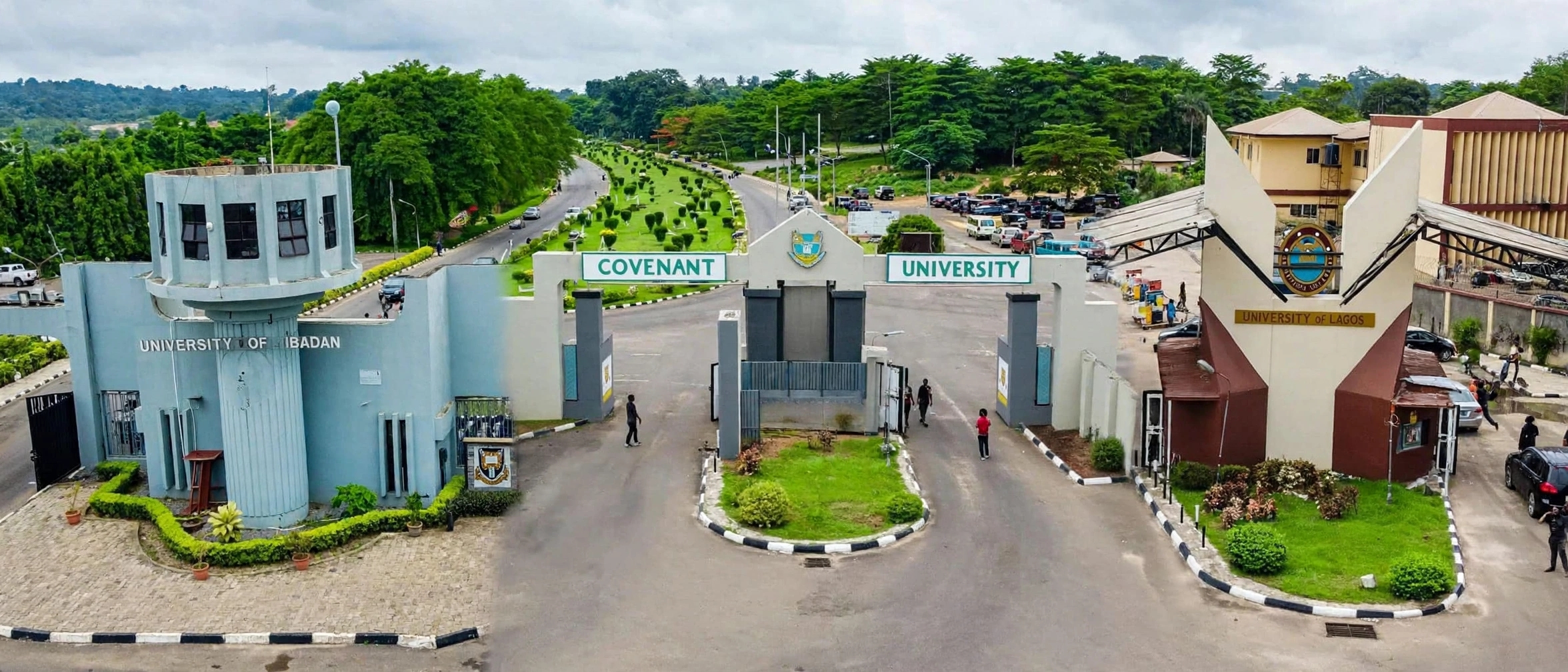
Covenant University, Ota, Ogun State, retained its position as Africa’s leading institution in interdisciplinary science, placing joint 49th globally.
The institution maintained its position ahead of Egypt’s Cairo University, which ranked joint 52nd.
Landmark University, Omu-Aran, Kwara State, emerged as Nigeria’s second-best institution, occupying the 251–300 global ranking band.
Ahmadu Bello University, Zaria, and the University of Ilorin followed in the 351–400 category, while the University of Calabar, University of Lagos and University of Nigeria, Nsukka, featured in the 401–500 band.
Eight Nigerian Universities Make Their Debut
The 2027 edition also welcomed eight Nigerian universities making their first appearance in the ranking.
They include:
- Federal University of Technology, Minna.
- Michael Okpara University of Agriculture, Umudike.
- Joseph Sarwuan Tarka University, Makurdi.
- University of Jos.
- Rivers State University.
- Babcock University.
- Bells University of Technology.
- Nile University of Nigeria.
Osun State University also returned to the ranking after missing the previous edition.
Of the 27 Nigerian universities ranked, 14 are federal institutions, seven are state-owned, while six are privately owned.
Seven additional Nigerian institutions received Reporter status after submitting institutional data, bringing the country’s total participation to 34 universities.
ABU, UNICAL Record Major Improvements
Despite the increase in the number of participating institutions, some Nigerian universities also recorded significant improvements in their ranking positions.
Ahmadu Bello University moved from the 601–800 category in 2026 to the 351–400 band in 2027.
Similarly, the University of Calabar advanced from the 601–800 category to the 401–500 band.
However, Professor Okebukola cautioned that increased participation should not be mistaken for improved overall research performance.
He disclosed that the number of Nigerian universities in the global top 300 declined from five in the previous edition to two, while those in the top 500 dropped from eight to seven.
He stressed the need for stronger research funding, improved facilities, institutional support and better reporting of research activities.
What the Global Ranking Measures
The Times Higher Education Interdisciplinary Science Rankings, produced in partnership with Schmidt Science Fellows, assess universities’ commitment to scientific research that combines knowledge and expertise from different academic disciplines.
The assessment uses 11 performance indicators grouped into three major categories:
- Research inputs – 19 per cent: Measures funding and resources committed to interdisciplinary research.
- Research processes – 16 per cent: Examines institutional structures, facilities and administrative support for research.
- Research outputs – 65 per cent: Evaluates the quality, reach and impact of research produced by universities.
The Massachusetts Institute of Technology (MIT), United States, retained the global first position in the 2027 edition.
What This Means for Nigerian Students and Parents
The increased representation of Nigerian universities is encouraging for the country’s higher education sector.
For students and parents, the development offers additional information when assessing universities, particularly institutions with growing research visibility.
However, prospective students should understand that the Interdisciplinary Science Rankings are not a general university ranking. They specifically measure research performance and commitment to interdisciplinary scientific work.
Consequently, students should also consider accreditation, course availability, teaching quality, facilities, graduate employability and professional recognition before choosing an institution.
Professor Okebukola said NiTERAC would work with participating universities and prospective entrants to strengthen their submissions and improve their performance ahead of the 2028 edition.
The bottom line: Nigeria has expanded its presence on the global scientific research map, but the next challenge is converting increased participation into stronger research output, international competitiveness and better-performing universities.