The Nigerian Air Force (NAF) ATR-42 aircraft that crashed in Igbokoda, Ondo State, on October 5, 2026, was not a newly acquired aircraft. It had been in the NAF inventory for more than 16 years and had a history of maritime surveillance, intelligence-gathering, military support missions and major overseas maintenance.
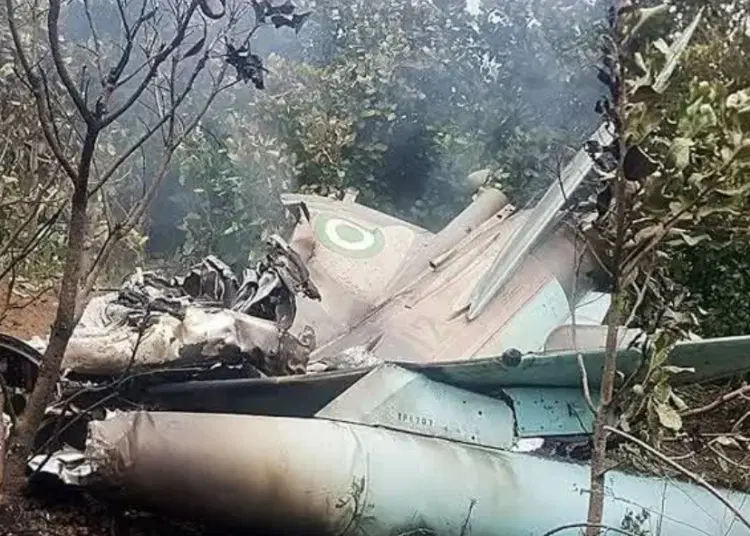
Here are the key facts Nigerians should know about NAF 931:
- It was delivered to Nigeria in 2010
NAF 931 was delivered to the Nigerian Air Force in March 2010, making it more than 16 years old when it crashed.
It was the second of two ATR-42 aircraft acquired by Nigeria from Italian aerospace manufacturer Alenia Aeronautica. The first, NAF 930, arrived in December 2009.
- The acquisition contract was signed in 2007
The two aircraft were procured under a $73 million contract signed in March 2007 with Alenia Aeronautica.
The package reportedly included the two aircraft, crew training and logistics support.
- It was primarily a surveillance aircraft
NAF 931 was an ATR 42-500MP Surveyor, configured for Intelligence, Surveillance and Reconnaissance (ISR) and maritime patrol.
Its mission equipment allowed it to monitor activities over Nigeria’s land and maritime areas. The ATR-42MP platform can also conduct search-and-rescue operations and limited transport duties.
- It was part of Nigeria’s fight against insecurity
The ATR-42 fleet was used to support military operations, including operations against Boko Haram and other criminal threats.
NAF records show that the aircraft operating from Benin had conducted combat-support missions across states including Sokoto, Zamfara, Katsina, Kaduna and Niger, while ATR-42 operations were also conducted in the North-East.
Importantly, the publicly documented 5,000-hour operational figure and specific Boko Haram missions refer to sister aircraft NAF 930, not necessarily NAF 931.
- It underwent maintenance in Scotland in 2013
NAF 931 was not simply flown continuously for years without major maintenance.
Aviation records show that it was taken to Edinburgh, Scotland, in September 2013 for maintenance at Air Contractors, where photographs indicate that it remained for several weeks.
- Its most significant maintenance episode was in Germany
NAF 931 was sent to Rheinland Air Service (RAS) in Mönchengladbach, Germany, for maintenance.
Aviation records reviewed by The ICIR indicate that it arrived there in January 2021 and remained there for more than three years. It was photographed at the facility in 2023 and was still there in September 2024.
It eventually returned to Nigeria in late December 2024.
- Parts of the aircraft were removed during the German maintenance
Photographs and aviation records reviewed by The ICIR showed NAF 931 at the German facility with several components removed, including its right engine.
However, this does not establish that the aircraft had an engine problem before the crash or that the maintenance contributed to the accident. The exact scope of the work carried out in Germany has not been publicly disclosed by NAF.
- The long maintenance period raises questions — but proves nothing by itself
The aircraft’s more-than-three-year stay in Germany is an important part of its maintenance history.
But it would be wrong to conclude that the prolonged maintenance caused the crash. Investigators will need to establish whether there was a mechanical, electrical, operational, weather-related or other failure.
The Defence Headquarters has ordered an investigation into the crash.
- It was operated from Benin City
The ATR-42 aircraft were operated by the NAF’s Air Maritime Group in Benin City, Edo State, and were also deployed for other military operations.
Their role went beyond maritime surveillance; they could provide intelligence support, search and rescue and limited transportation.
- Its final flight was described as a routine mission
On October 5, 2026, NAF 931 was flying on a routine mission from Benin City to Lagos when the accident occurred near Igbokoda in Ondo State.
The aircraft lost communication with air-traffic controllers before the crash. NAF later confirmed that 25 people — five crew members and 20 passengers — were aboard and that there were no survivors.
The bigger picture
The story of NAF 931 is therefore more complicated than simply describing it as an “old aircraft.”
It was over 16 years old, but had undergone overseas maintenance, including a particularly lengthy maintenance programme in Germany that ended with its return to Nigeria in late 2024. It had also served an important role in Nigeria’s surveillance and security operations.
The crucial question now is not simply how old the aircraft was, but what happened to it on the morning of October 5, 2026, and whether any mechanical, maintenance, operational or other factor contributed to the crash. Only the official investigation can properly establish that.