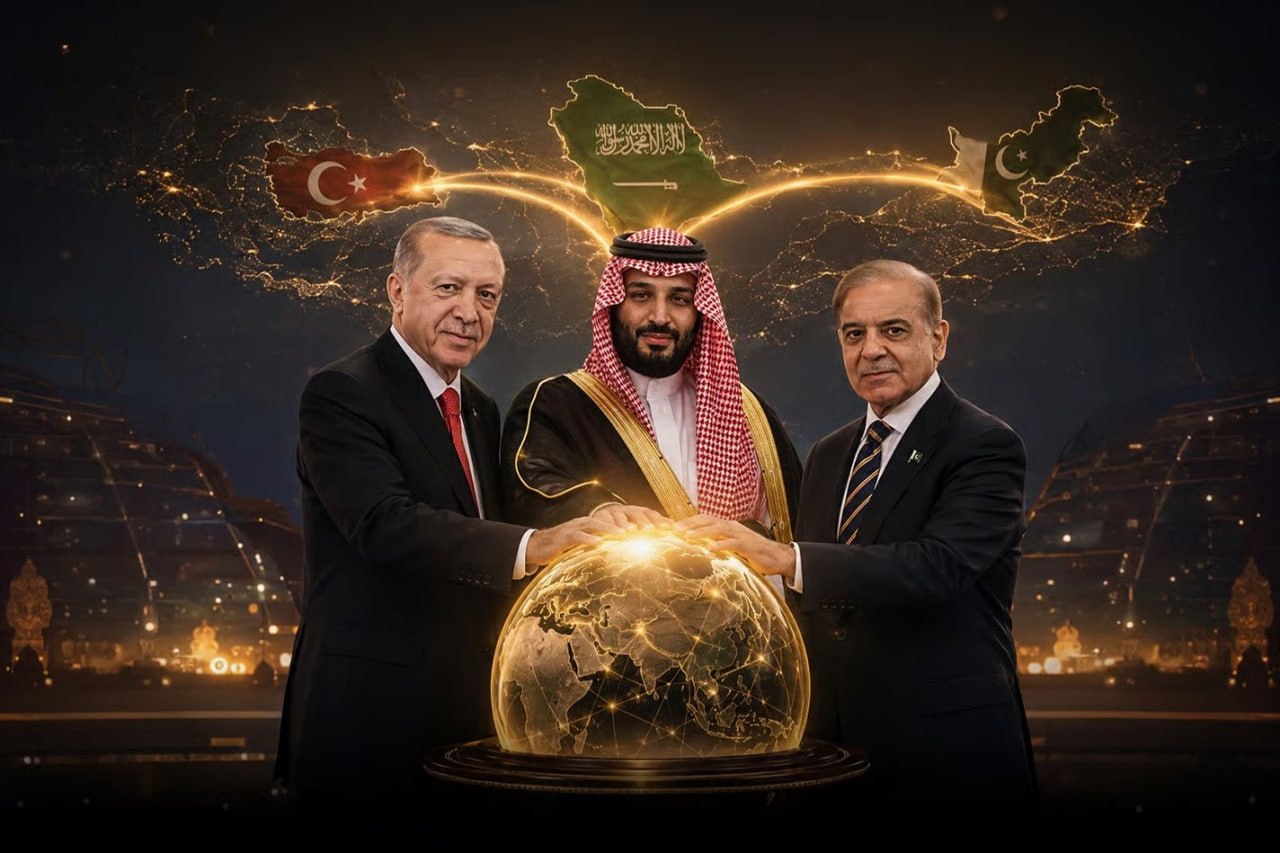
RIYADH — October 5, 2026: Saudi Arabia, Pakistan and Türkiye have activated their newly established Makkah Joint Defence Agreement following escalating attacks by Yemen’s Houthi movement on Saudi territory.
The three countries held an emergency meeting of the pact’s Strategic Political and Defence Committee in Riyadh on Monday, with Saudi Defence Minister Prince Khalid bin Salman announcing that the members had agreed to activate “collective deterrence measures” in response to the Houthi attacks.
The development marks the first major test of the defence agreement, which was signed in August by Saudi Arabia, Pakistan and Türkiye. The pact establishes a framework for collective defence, with an attack on one member treated as an attack on all three.
Pakistan and Türkiye prepare for rapid deployment
Following Monday’s meeting, the three countries agreed to provide the military forces and capabilities required under the pact and to enable their rapid deployment to Saudi Arabia, subject to each country’s national laws and procedures.
Pakistan’s participation is particularly significant because Islamabad has already publicly stated that it would make its military capabilities available to defend Saudi Arabia under the agreement.
However, Pakistan has not publicly confirmed that its forces will conduct combat operations inside Yemen. Its defence minister, Khawaja Asif, previously said Pakistan was bound by the agreement to defend Saudi Arabia, while maintaining diplomatic channels with Iran.
Türkiye is also strengthening military cooperation with Riyadh under the pact. Turkish officials said the agreement is being used to increase military readiness and coordination among the three countries.
Why the Houthis are at the centre of the crisis
The immediate trigger is a sharp escalation in Yemen.
Yemen’s Saudi-backed government has launched a major offensive against the Houthis, with government forces reporting advances around the Bab el-Mandeb Strait and the Red Sea coast. Reuters reported on Monday that Yemeni government forces had pushed the Houthis out of several areas around the strategic waterway.
The Houthis have also carried out missile and drone attacks against Saudi Arabia, raising concerns over the security of Saudi territory, energy infrastructure and important religious sites.
Why Bab el-Mandeb matters
The confrontation is not only about territory.
The Bab el-Mandeb Strait connects the Red Sea with the Gulf of Aden and is one of the world’s important maritime chokepoints. Control or disruption of the area can affect international shipping between Europe and Asia.
The latest fighting therefore carries implications beyond Yemen and Saudi Arabia, particularly for commercial shipping and regional security.
What the Makkah Pact means
The agreement brings together three countries with very different military capabilities:
- Saudi Arabia — the regional power directly facing the Houthi threat.
- Türkiye — a NATO member with a growing domestic defence industry.
- Pakistan — a nuclear-armed state with a large conventional military.
The pact was designed as a collective-defence arrangement and has been compared by officials and analysts to the principle behind NATO’s Article 5, although the full text of the agreement has not been publicly released.
Major takeaways
- The pact has moved from paper to action: Monday’s Riyadh meeting represents the agreement’s first major operational test.
- Saudi Arabia is seeking collective defence: Riyadh wants stronger protection against Houthi missiles and drones.
- Pakistan and Türkiye have committed military capabilities: The three countries agreed on rapid deployment of agreed forces and capabilities to Saudi Arabia, subject to national procedures.
- It does not automatically mean Pakistani or Turkish troops are entering Yemen: The immediate publicly announced commitment is focused on defending Saudi Arabia and collective deterrence.
- Yemen’s war is entering a new phase: Saudi-backed government forces are simultaneously conducting an offensive against Houthi-held territory.
- Bab el-Mandeb is a critical factor: Fighting around the strait could affect one of the world’s important shipping routes.
- Iran is indirectly involved in the strategic picture: The Houthis are widely described by international sources as Iran-backed, although Tehran’s exact degree of operational control over the group remains disputed.
- The alliance is still being institutionalised: The three countries are developing its command, coordination and administrative structures.
The activation of the Makkah pact therefore represents a significant development in the Yemen conflict, but the precise scale of Pakistani and Turkish military involvement remains dependent on further decisions by the three governments.