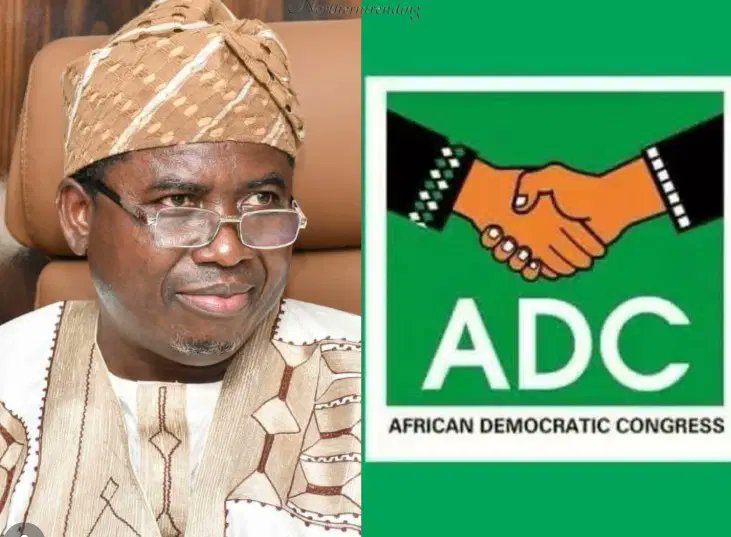
The Supreme Court of Nigeria has affirmed the leadership of the African Democratic Congress (ADC) under a faction aligned with former Senate President David Mark, bringing a decisive end to months of internal crisis and setting the stage for a significant realignment ahead of the 2027 general elections.
The apex court’s ruling, which settles the question of legitimate leadership within the party, is expected to have immediate legal and political consequences, particularly in determining who controls the ADC’s structure and electoral machinery.
INEC to Enforce Recognition
Following the judgment, the Independent National Electoral Commission (INEC) is expected to update its records to reflect the David Mark-led leadership as the authentic authority within the party.
This recognition is critical, as only officials acknowledged by INEC can:
Conduct party primaries
Submit candidate lists
Interface with the electoral body
With the ruling now settled, all parallel claims to leadership are effectively extinguished in the eyes of the law.
Full Control of Party Structure
The judgment confers sweeping control on the recognised leadership, including:
The National Working Committee (NWC)
State and local government party structures
Party finances and administrative systems
Party sources indicate that immediate steps are underway to consolidate control across state chapters and harmonise structures previously split by factional disputes.
Nullification of Rival Faction Decisions
Legal analysts say actions taken by the opposing faction during the pendency of the dispute—including congresses, appointments, and strategic alignments—may now be rendered invalid.
Conversely, decisions taken by the David Mark-led leadership are expected to gain full legal backing, providing a stable foundation for future party activities.
Race Against Time for 2027 Compliance
With the 2027 electoral cycle already in motion, the ADC leadership faces a narrow window to:
Revalidate membership registers
Conduct credible primaries
Meet INEC submission deadlines
Political observers warn that while the judgment provides clarity, the compressed timeline demands swift organisational efficiency to ensure the party’s full participation in the elections.
Boost for Opposition Coalition Efforts
The ruling is widely seen as a major boost for ongoing opposition coalition talks, with the ADC increasingly viewed as a potential platform for broader political alliances.
The emergence of a legally recognised leadership under David Mark is expected to:
Enhance internal stability
Attract defectors and coalition partners
Position the party as a more credible challenger in 2027
However, analysts caution that the success of such coalition efforts will depend on how effectively the leadership manages post-judgment reconciliation within the party.
Implications for 2027 Electoral Dynamics
The Supreme Court’s decision is poised to influence the broader electoral landscape in several ways:
Strengthened Opposition Platform: A unified ADC could serve as a rallying point for opposition forces seeking to challenge the ruling party.
Reduced Litigation Uncertainty: The judgment eliminates legal ambiguity that could have hindered candidate nomination.
Potential Surge in Defections: Politicians dissatisfied with their current parties may now view ADC as a viable alternative.
At the same time, the ruling places significant responsibility on the party’s leadership to translate legal victory into political competitiveness.
Precedent on Party Leadership Disputes
Beyond the ADC, the judgment reinforces the authority of the judiciary in resolving internal party disputes, underscoring the decisive role of the courts in shaping Nigeria’s electoral process.
Conclusion
With the Supreme Court’s endorsement of the David Mark-led leadership, the ADC has cleared a major legal hurdle. The focus now shifts to political strategy, organisational rebuilding, and coalition-building efforts that will determine whether the party can convert its legal victory into electoral success in 2027.
The ruling has not only settled a leadership contest it has potentially repositioned the ADC at the centre of Nigeria’s evolving opposition politics.