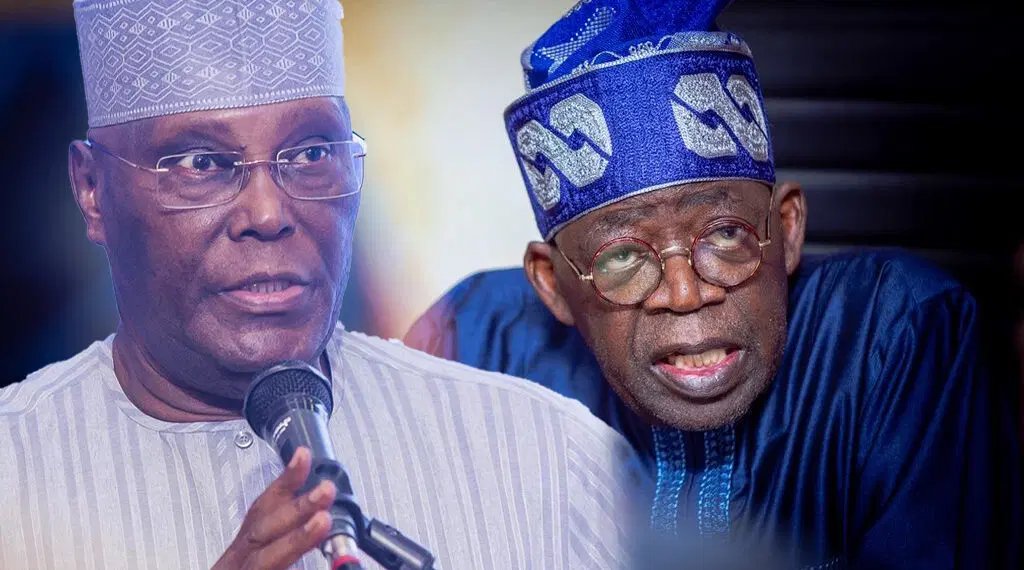
Fresh controversy has erupted over more than $10 million reportedly committed to lobbying activities in the United States by the camps of President Bola Ahmed Tinubu and former Vice-President Atiku Abubakar, amid Nigeria’s ongoing economic challenges.
According to a report by Vanguard, publicly disclosed filings under the United States Foreign Agents Registration Act (FARA) put the combined value of the two engagements at about $10.2 million.
At an exchange rate of approximately ₦1,400 to the dollar, the amount is equivalent to about ₦14.28 billion.
Vanguard reported that the figures have triggered debate over the opportunity cost of spending such sums on lobbying abroad while millions of Nigerians and small businesses continue to face difficulties accessing capital.
How the $10.2m was reportedly spent
The report said the Federal Government engaged Washington-based DCI Group in December 2025 to help communicate Nigeria’s position to US policymakers, particularly regarding the country’s security situation, efforts to protect Christian communities and continued American support for Nigeria’s counter-terrorism campaign.
According to the report, the agreement provided for a $750,000 monthly retainer.
The initial six-month engagement was valued at $4.5 million, with an automatic renewal capable of taking the total value of the contract to $9 million.
Vanguard said Nigeria paid $4.5 million upfront for the first six months.
On the other side, former Vice-President Atiku Abubakar reportedly engaged Washington-based lobbying firm Von Batten-Montague-York, L.C. under a $1.2 million, 12-month agreement.
Documents filed with the US Department of Justice reportedly indicated that the engagement was intended to strengthen Atiku’s standing within US policy circles, facilitate contacts with members of Congress and executive-branch officials, and provide strategic advice.
Tinubu-related US records become part of dispute
Vanguard further reported that, in July, the lobbying firm engaged by Atiku was said to have begun circulating historical US Department of Justice records relating to a 1993 drug-trafficking asset-forfeiture case linked to Tinubu among members of the Trump administration, Congress and senior congressional staff.
More than 60 pages of records were reportedly submitted.
The development has added another dimension to the political rivalry between Tinubu and Atiku ahead of the 2027 presidential election.
What could ₦14.28bn do in Nigeria?
Vanguard used the combined figure to illustrate the potential domestic opportunity cost.
For instance, if ₦14 billion were divided into packages of:
- ₦250,000 each, about 56,000 interventions could be made.
- ₦500,000 each, about 28,000 businesses could be supported.
- ₦1 million each, about 14,000 businesses could be supported.
- ₦5 million each, about 2,800 enterprises could be financed.
- ₦10 million each, about 1,400 businesses could be supported.
However, Vanguard made clear that these are illustrative calculations, not evidence that the money would automatically create that number of successful businesses.
The actual impact would depend on the financing model, administration costs, sectors involved, business survival rates and whether the funds were distributed as grants, loans or equity.
Why the spending is attracting attention
The controversy comes against the backdrop of widespread concerns over the cost of living, limited access to credit and the challenges facing Nigeria’s micro, small and medium-sized enterprises.
The central question raised by the report is therefore not simply whether lobbying is permitted or whether politicians and governments can hire lobbyists abroad.
Rather, it is whether spending millions of dollars on lobbying in Washington represents the best use of resources when similar funds could potentially support businesses, employment and other interventions within Nigeria.
The Federal Government’s engagement, however, has a stated diplomatic and security objective, while Atiku’s engagement was reportedly aimed at advancing his interests within US policy circles.
The two engagements therefore have different purposes and should not automatically be treated as identical expenditures.
The latest development is nevertheless likely to intensify political arguments over campaign spending, foreign lobbying, political influence and the use of scarce resources ahead of the 2027 election.