

Plateau, Nigeria | January 27, 2026
As the world marks World Leprosy Day 2026, the Leprosy and Tuberculosis Relief Initiative Nigeria (LTR) has issued a powerful call for urgent national action, warning that stigma, neglect, and chronic underfunding — not medicine — are now the biggest barriers to ending leprosy in Nigeria.

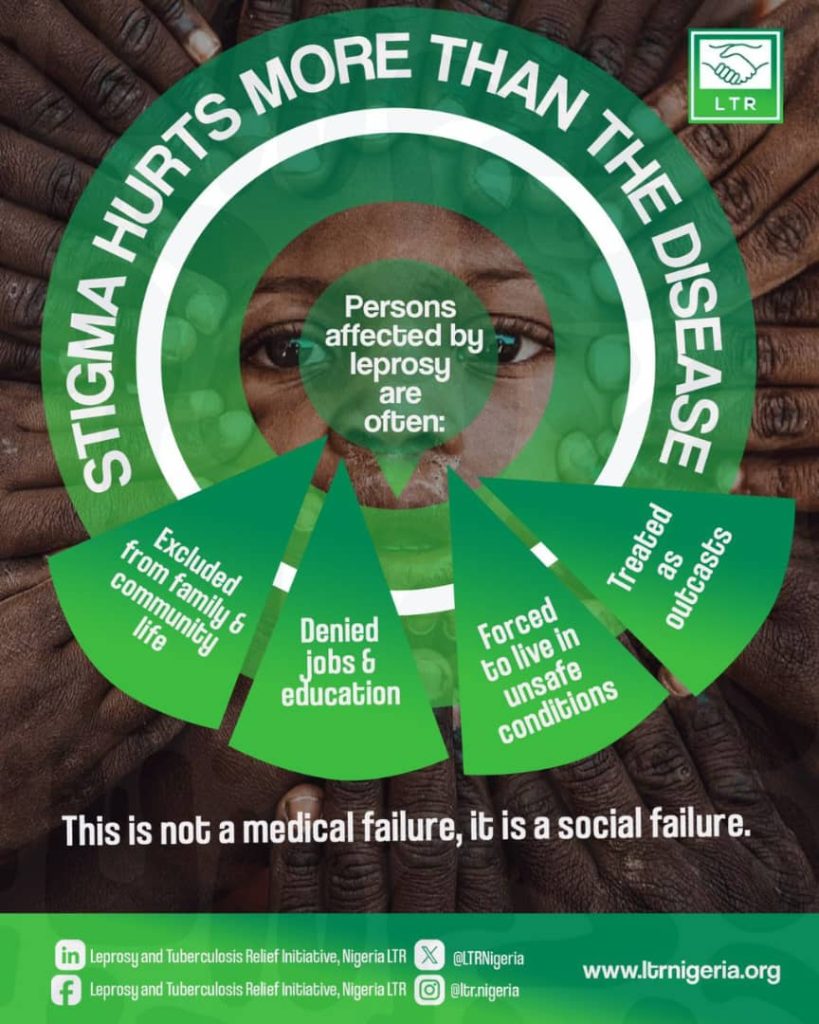
With the global theme, “Leprosy is curable. The real challenge is stigma,” LTR stressed that science has long solved the medical problem of leprosy, yet society continues to fail those affected. Fear, discrimination, and misinformation still push people into hiding, delay treatment, and cause preventable disabilities.
“Leprosy no longer destroys lives by itself — stigma does,” LTR said. “It separates families, destroys livelihoods, and robs people of dignity long after they are cured.”
LTR emphasised that leprosy is caused by bacteria, that treatment is free and effective, and that early diagnosis prevents disability. However, in many communities across Nigeria, deep-seated prejudice forces people to conceal their illness, avoid health facilities, and suffer in silence.
Despite Nigeria remaining among countries that report new leprosy cases every year, funding for leprosy control, rehabilitation, and social reintegration remains dangerously low. According to LTR, this persistent underinvestment weakens early case detection, contact tracing, disability prevention, community education, and welfare support.
“Neglecting leprosy because it affects the poorest and most marginalised Nigerians is not an accident — it is a policy failure and a moral failure,” the organisation warned.
Beyond medical treatment, LTR noted that many persons affected by leprosy live with permanent disabilities, inadequate housing, limited access to social protection, and lifelong discrimination. Cure alone, the organisation said, does not guarantee dignity.
“A health response that ends at treatment but ignores rehabilitation and reintegration leaves people healed, yet abandoned,” LTR stated.
The organisation also condemned the continued existence of dilapidated leprosy colonies across Nigeria, describing many as overcrowded, unsafe, and lacking basic amenities. According to LTR, these conditions reinforce stigma and segregation rather than restore dignity and inclusion.
“In 2026, it is unacceptable that Nigerians affected by a curable disease are still forced to live in conditions that deny their humanity,” LTR said, calling for modern, humane, and inclusive approaches that prioritise rehabilitation, social protection, and reintegration into society.
Drawing on over four decades of experience inherited from the Netherlands Leprosy Relief legacy, LTR said it continues to support leprosy and tuberculosis control in several states through early detection, post-exposure prophylaxis, training of health workers and community volunteers, disability prevention, and stigma-reduction initiatives. While progress is possible, the organisation stressed that it cannot be sustained without political will and adequate funding.
On World Leprosy Day 2026, LTR called on the Federal and State Governments to urgently increase domestic funding for leprosy control, rehabilitation, and welfare services; urged donors and development partners to sustain investments in elimination and stigma reduction; challenged the media to stop harmful stereotypes and amplify dignity-centred narratives; and appealed to communities and faith leaders to reject myths and stand for inclusion.
“Ending leprosy is no longer just a medical obligation — it is a test of our commitment to human dignity, equity, and justice,” LTR declared.
The organisation concluded that World Leprosy Day must be a turning point, not a symbolic gesture.

“Leprosy is curable,” LTR said. “What remains is the courage to confront stigma, the willingness to invest, and the resolve to act — now.”